Post-Procedure Skin Care
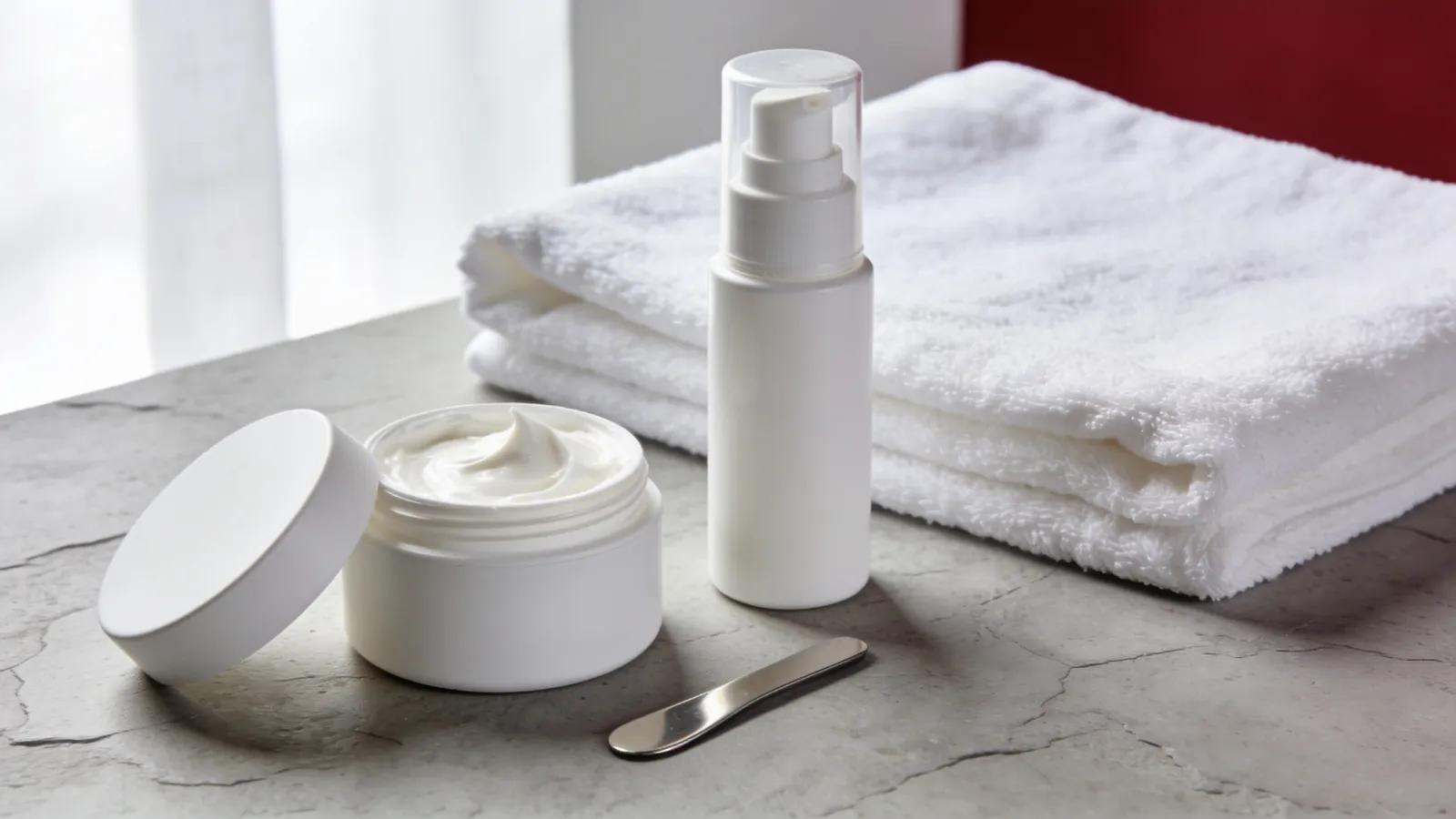
After resurfacing, microneedling, peels and similar procedures, the skin barrier is temporarily disrupted. The recovery period affects both comfort and the eventual result.
When clinician evaluation matters
Signs of infection, unexpected pain, blistering or delayed healing should be evaluated promptly by the treating clinician.
FDA-approved and commercially available landscape
Commercially available emollients and barrier repair products, and topical antibiotics and antivirals where indicated, including mupirocin, bacitracin-neomycin-polymyxin B (Neosporin), trolamine emulsion (Biafine), silver sulfadiazine and zinc oxide. Where a commercial product meets the clinical need, it is generally the appropriate first consideration.
Why customization may be considered
A patient may react to a preservative or fragrance in a commercial product; a prescriber may want a specific combination of active ingredients suited to the patient; or a prescriber may want an active ingredient in a dosage form or strength that is not commercially available.
Potential customized categories
Preparations combining tretinoin, niacinamide, pantothenic acid, hyaluronic acid and ascorbic acid; corticosteroid-containing preparations where a prescriber judges them appropriate. Status: Compounded Option.
Safety
Disrupted skin carries a risk of infection, and any preparation applied to it should be prescriber-directed. Retinoids are contraindicated in pregnancy. Timing of retinoid reintroduction after a procedure is a prescriber decision.
Patients: Transfer a Prescription
Compounded preparations are not FDA approved. FDA does not review them for safety, effectiveness or quality before they are dispensed, and they are not equivalent to commercially available approved products. California requires a patient-specific prescription for a compounded preparation, and a pharmacy may not compound what is essentially a copy of a commercially available product unless the pharmacist documents a clinically significant difference for the individual patient or the product is in shortage. This page is general information, not medical advice.
References
- Mupirocin product labels, DailyMed, National Library of Medicine
- Bacitracin, neomycin and polymyxin B product labels, DailyMed, National Library of Medicine
- Silver sulfadiazine product labels, DailyMed, National Library of Medicine
- Tretinoin topical product labels, DailyMed, National Library of Medicine
- California Code of Regulations, Title 16, sections 1735 to 1735.15, nonsterile compounding (effective Oct. 1, 2025), California State Board of Pharmacy
Clinical review: Dor Keyvani, PharmD, Pharmacist-in-Charge, California pharmacist license RPH 75634. Clinically reviewed Oct. 20, 2026. Updated Nov. 10, 2026. See our Editorial Policy and Quality and Safety pages.