
Compounded Topical Anesthetics
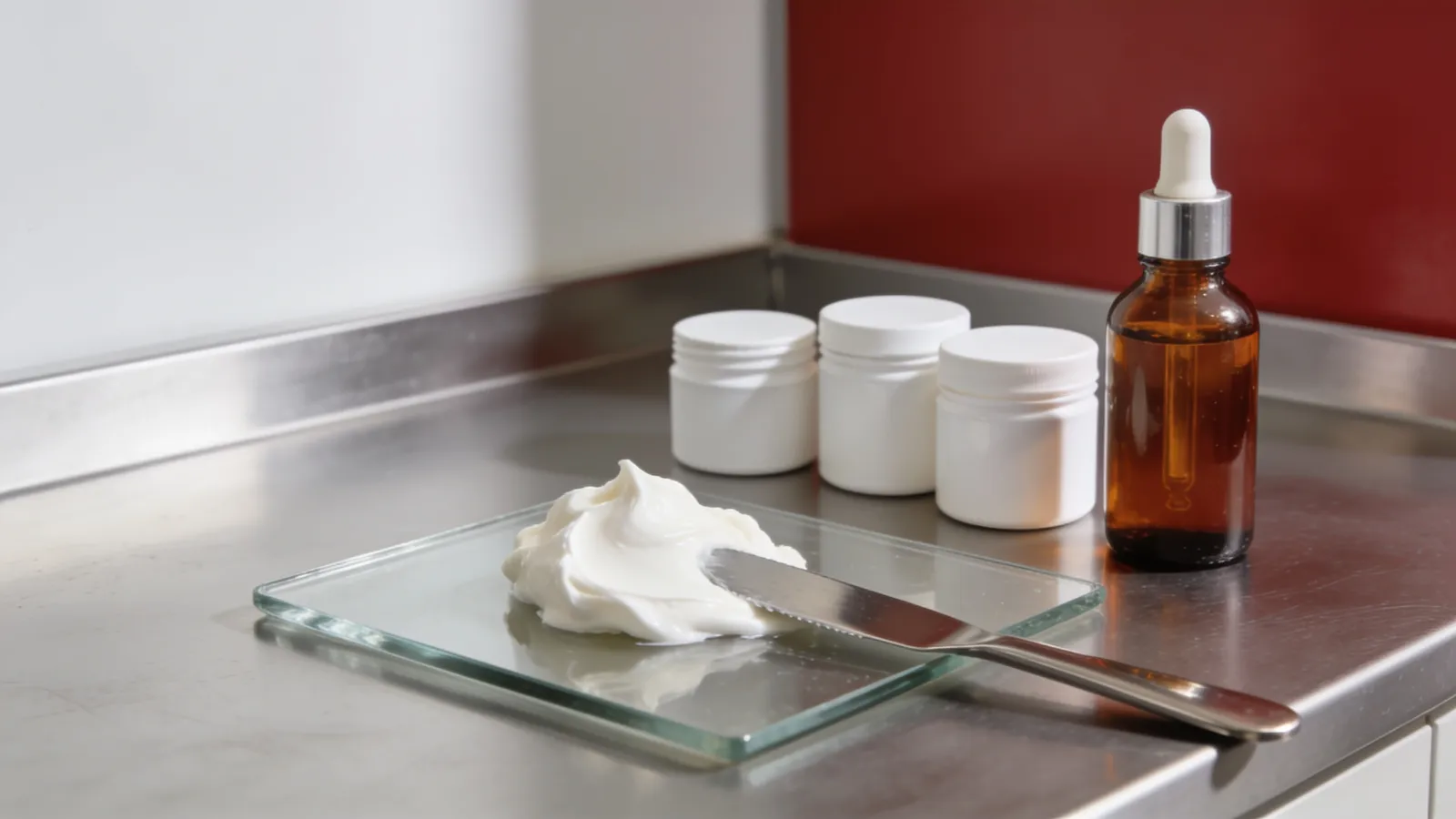
A category of prescription topical preparations combining one or more local anesthetic agents in a vehicle chosen by the prescriber for an individual patient.
FDA-approved landscape first
Lidocaine-prilocaine cream, lidocaine-tetracaine cream and topical lidocaine products are FDA approved. FDA advises using an approved topical anesthetic, in the lowest amount that relieves pain, where one meets the need. Status: FDA-Approved Product.
When a prescriber may consider a compounded preparation
When a patient has a documented sensitivity to a component of an available product; when the dosage form itself is the limitation; or when the prescriber determines that a strength or combination not commercially available is needed for a specific patient.
Active ingredients and the role of each
| Active | Role |
|---|---|
| Lidocaine | Amide local anesthetic; blocks sodium channels to interrupt nerve conduction |
| Tetracaine | Ester local anesthetic; longer duration of action |
| Prilocaine | Amide local anesthetic; used in combination |
| Benzocaine | Ester local anesthetic; surface-active |
| Phenylephrine | Alpha-adrenergic vasoconstrictor; reduces local blood flow |
Combinations we compound
ALWAYS Rx compounds the following combinations on prescription. Strengths are specified on the prescription and are not published. Compounded combinations have not been evaluated by FDA for safety or effectiveness.
| Combination | Dosage form | Notes |
|---|---|---|
| Lidocaine (single agent) | Cream or ointment | Ester-free option for patients avoiding benzocaine or tetracaine |
| Benzocaine, lidocaine, tetracaine | Cream or ointment | |
| Lidocaine, tetracaine | Cream or ointment | Benzocaine-free option |
| Benzocaine, lidocaine, tetracaine, phenylephrine | Cream or ointment | |
| Lidocaine, tetracaine, phenylephrine | Cream or ointment | |
| Benzocaine, lidocaine, tetracaine, prilocaine | Ointment | Stored refrigerated |
| Benzocaine, lidocaine, tetracaine, prilocaine, phenylephrine | Ointment | Stored refrigerated |
| Lidocaine, phenylephrine | Spray | For scalp application |
| Lidocaine, tetracaine | Spray | For scalp application |
Dosage forms and beyond-use dating
Cream, ointment, gel, spray, solution. Each preparation is labeled with a beyond-use date and storage instructions assigned under USP General Chapter 795 and California regulations.
Selection considerations
Treatment area and surface area, skin integrity, vehicle, patient sensitivity to ester or amide agents, storage and beyond-use date. The prescriber decides.
Safety and monitoring
Systemic absorption rises with area, covering of the skin, contact time and barrier disruption. Benzocaine and prilocaine carry a recognized methemoglobinemia association. Ester and amide agents differ in hypersensitivity profile. Not for application to broken skin.
Status: Compounded Option. Not FDA approved. Not equivalent to commercially available approved products.
Safety with topical anesthetics
FDA has warned that topical anesthetics can cause serious harm, including irregular heartbeat, seizures, breathing problems and death, when too much drug is absorbed through the skin. Risk rises with stronger preparations, large application areas, long contact time, covering or wrapping the skin, heat, and irritated or broken skin.
- Use the lowest amount that controls pain, on the smallest area, for the shortest time, exactly as the prescriber directs.
- Do not wrap, cover or heat the area unless the prescriber instructs you to.
- Do not apply to broken, irritated or freshly treated skin.
- Seek emergency care for dizziness, confusion, ringing in the ears, bluish skin or lips, shortness of breath, seizure or an irregular heartbeat.
Prescribers: Let’s Collaborate
Compounded preparations are not FDA approved. FDA does not review them for safety, effectiveness or quality before they are dispensed, and they are not equivalent to commercially available approved products. California requires a patient-specific prescription for a compounded preparation, and a pharmacy may not compound what is essentially a copy of a commercially available product unless the pharmacist documents a clinically significant difference for the individual patient or the product is in shortage. This page is general information, not medical advice.
References
- Lidocaine and prilocaine cream (EMLA) prescribing information, FDA
- Lidocaine and tetracaine cream (Pliaglis) prescribing information, Taro, August 2020
- FDA Drug Safety Communication on benzocaine and methemoglobinemia, May 23, 2018
- California Code of Regulations, Title 16, sections 1735 to 1735.15, nonsterile compounding (effective Oct. 1, 2025), California State Board of Pharmacy
Clinical review: Dor Keyvani, PharmD, Pharmacist-in-Charge, California pharmacist license RPH 75634. Clinically reviewed Oct. 20, 2026. Updated Nov. 10, 2026. See our Editorial Policy and Quality and Safety pages.